For International Schools

Professor-led academic programmes for international schools.

Wisesprout partners with international schools to bring real university academics into school life — professor talks, cohort programmes taught into your classrooms, a UK research immersion pathway, and one-to-one mentorship. All of it shaped around your calendar and your students.

  • Future Scholars · JuniorsYears 5–9 · live cohort
  • Future ScholarsYears 10–13 · professor seminars
  • Research ImmersionYears 10–13 · 7–10 days in the UK
  • Academic Mentorshipone-to-one · weekly

Live online · On campus · Bilingual EN / 中文

Discuss a school partnership

Programmes at a glance

Four programmes, one academic ladder.

ProgrammeStudentsFormatDurationWhat students take awayWhere it fits
Future Scholars · JuniorsYears 5–9Live online small group · on campus with partner schoolsOne term · 8 × 90-minute sessionsThe whole scientific map, opened before GCSE options narrow itLower-school science enrichment
Future Scholars — Professor Seminar SeriesYears 10–13 · GCSE–A-level · IB (strong Year 10s considered)Live, taught by the professor · online or in person14 hours per seminarCompletion certificate · tutor feedback · reference letter (subject to engagement)Senior academic extension
Research ImmersionYears 10–13 · GCSE–A-level · IBUK-based · London, Oxford & Cambridge7–10 daysResearch report · growth portfolioSchool summer / winter UK pathway
Academic MentorshipYears 10–13One-to-one · weekly meetingsTermly, ongoingAcademic guidance · admissions-test support (ESAT / TMUA)Individual stretch for selected students

Senior programmes are mainly for students who already have an initial subject direction — science, engineering, medicine, the social sciences and so on — and want to understand more about how UK universities teach and do research.

In numbers

What we've built so far.

  • 100+students improvedA-level & GCSE: Chemistry, Maths, Physics, Biology, etc. — jumps from A to A*, and from B to A
  • 800+Masterclass students taughtPhysics, Chemistry, Biology, etc. — both online and in person
  • 50+QS top-50 offersOffers from QS top-50 universities — e.g. UCL, Edinburgh, Manchester, KCL, Cambridge
  • 20+elite lab placements2–3 students each time — two intensive days inside a real research project
  • 20+top UK professorsFrom the UK's top universities, across London, Cambridge & Oxford — teaching and mentoring in person
  • 50+PhDs & postdocsAcross many disciplines — one-to-one and small-group mentor teams
  • 10+partner schools & exchangesLong-term international-school partnerships across major Chinese cities: Beijing, Shanghai, Hangzhou, Shenzhen, Guangzhou
  • 5top UK universities onlyEvery mentor comes from one of the UK's five leading universities

We make no admissions promises — honesty is our principle in education. We would rather let our past students' real results speak: their destinations include the University of Oxford, the University of Cambridge and other leading UK universities.

Why this helps schools

What a partnership does — for students, parents and the school.

For students

  • Subject exploration well beyond the syllabus, with the people doing the research
  • University-style learning early — lectures, seminars, real academic work
  • Honest application material: work they did and can speak about in their own words

For parents

  • A clear window on UK university pathways, from people inside the system
  • Professor-led parent talks — subject choices, AI and learning, application seasons
  • Confidence in exactly who is teaching their children, by name

For schools

  • Differentiated academic provision without hiring for it
  • Co-branded academic events and cohorts, built around your calendar
  • A UK academic pathway to offer families — enrichment through to immersion
The programmes

What we run together.

Four programmes — one ladder from upper primary to the university gate.

Flagship · New term this October

Future Scholars · Juniors

One programme, four sciences, eight live sessions — the whole scientific map, opened up for Years 5–9 before GCSE options narrow it.

  • Years 5–9
  • 8 live sessions × 90 minutes
  • Small groups · online, or on campus with a partner school

This October's term — one programme, four sciences:

Chemistry

Chemistry

Why anything turns into anything else.

Physics

Physics

The rules the whole universe agrees on.

Biology & Medicine

Biology & Medicine

How a body knows what to do.
Big Data & AI

Big Data & AI

How a machine learns to guess.

How your school helps us run it

1 · Hardware

A · Ideal
One computer or iPad per student — the class is full of interactive moments, where students tap, vote, play quick games and put questions straight to these academic idols.
B · Limited
Students watch together and do the interactive parts in groups, so everyone still takes part.
C · Either way
We confirm devices and network with the school beforehand and adapt the interaction to suit.

2 · Language support

We provide
Live AI subtitles · a Chinese-speaking classroom assistant · Chinese recaps and key-point notes afterwards.
The school arranges
A teacher who knows the students in the room, to help run the class and give any language support needed.
Flagship · Years 10–13

Future Scholars — Professor Seminar Series

An in-depth single-subject course, taught live by the professor who leads the research — foundations to frontier. For Years 10–13 (GCSE to A-level, IB and international equivalents); academically strong Year 10 students may also be considered.

  • Online: 14 + 6 hours · 7 sessions
  • In school: 20 + 6 hours · 10 sessions (incl. 4 lab sessions)
  • Taught live by the professor
  • Small cohorts — around ten students
  • Completion certificate
  • Tutor feedback & academic comments
  • Reference letter (subject to engagement)
  • 600+ students taught · 20+ cohorts run

Rolling out from October — this term's planned seminars:

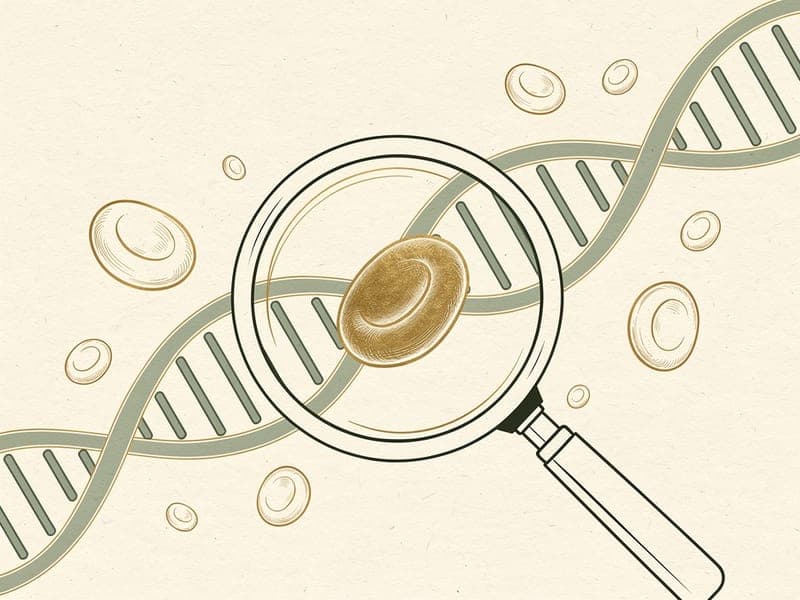
Precision Medicine & Early Detection

Medicine

Precision Medicine & Early Detection

Finding disease before symptoms appear.

Imperial College LondonFaculty of Medicine, Department of Metabolism, Digestion and Reproduction

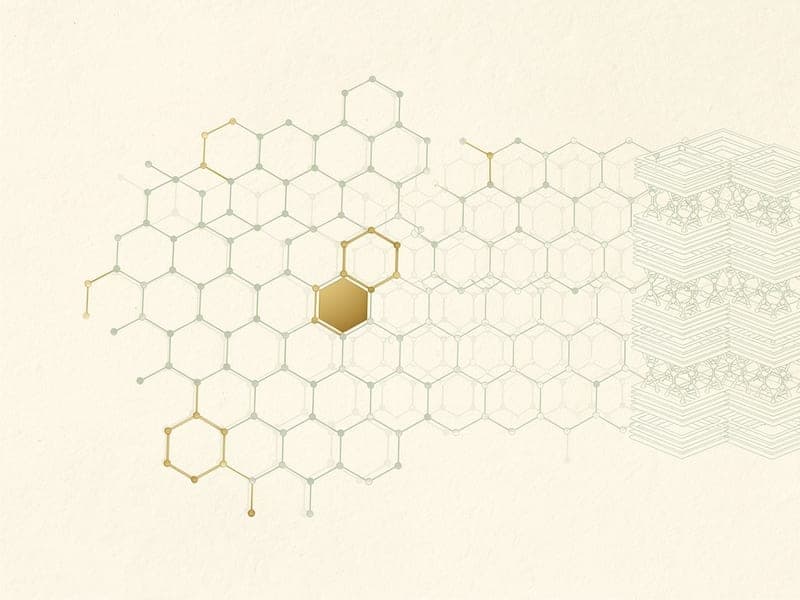
Advanced Materials & Nanoscience

Materials · Chemistry

Advanced Materials & Nanoscience

Designing materials at the nanoscale.

University of CambridgeDepartment of Materials Science & Metallurgy

AI & Large Language Models

Artificial Intelligence

AI & Large Language Models

How machines learned language.

UCLCentre for Artificial Intelligence, Department of Computer Science

Neuroscience & Brain–Computer Interfaces

Neuroscience

Neuroscience & Brain–Computer Interfaces

Letting the brain talk to machines.

UCLQueen Square Institute of Neurology

Gene Editing & Synthetic Biology

Biology

Gene Editing & Synthetic Biology

Rewriting life's source code.

University of CambridgeDepartment of Genetics

Quantum Computing & Quantum Information

Physics

Quantum Computing & Quantum Information

How qubits change the rules of computing.

University of OxfordDepartment of Physics

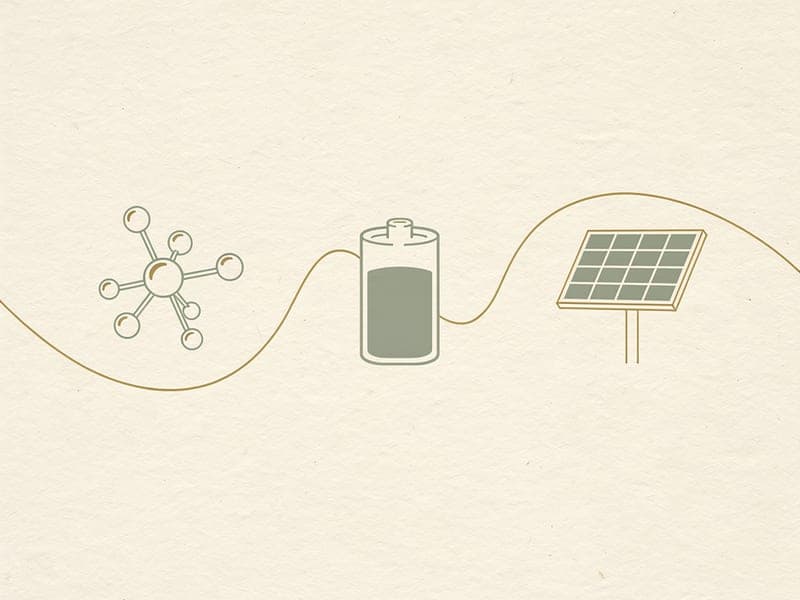
New Energy & Energy Storage

Chemistry · Engineering

New Energy & Energy Storage

The chemistry behind the energy transition.

University of OxfordDepartment of Materials

Behavioural Economics & Decision Science

Economics

Behavioural Economics & Decision Science

Why people make irrational decisions.

LSEDepartment of Psychological and Behavioural Science

Quantitative Finance & Financial Mathematics

Finance · Mathematics

Quantitative Finance & Financial Mathematics

How mathematics prices risk.

LSEDepartment of Finance

Cryptography & Digital Security

Mathematics · Computing

Cryptography & Digital Security

The locks and keys of the digital world.

University of CambridgeDepartment of Computer Science and Technology

Industrial Design & Product Innovation

Design · Engineering

Industrial Design & Product Innovation

How good design happens — from a pen to a car.

Imperial College LondonDyson School of Design Engineering

Astrophysics & Space Science

Physics · Astronomy

Astrophysics & Space Science

From exoplanets to black holes.

UCLMullard Space Science Laboratory

UK pathway · Summer & winter

Research Immersion

Seven to ten days in London, Oxford and Cambridge — professor-led lectures, guided academic work on a research theme, and university life as it actually runs. Academic immersion, not a study tour.

  • 7–10 days · UK-based
  • Professor-led lectures · labs & campus immersion
  • Research report + growth portfolio to take home
  • Speaks to new UCAS personal-statement Q3 — course-related learning beyond the taught curriculum
  • Years 10–13 · GCSE–A-level · IB

One-to-one

Academic Mentorship

PhD and postdoctoral researchers from top UK universities in the tutor's seat — modelled on how Imperial mentors its own undergraduates.

  • Weekly one-to-one meetings
  • Academic guidance · profile-building · honest advice
  • Targeted support for newer admissions tests — ESAT, TMUA, MAT, STEP, PAT
  • Three tutor tiers — PhD candidate · postdoc · senior academic/professor, by genuine academic standing

Sample itinerary · Imperial College research camp

Every summer · 9 days

  • 25hours core academics
  • 9hours in the lab
  • 3campuses

5 days of core teaching

Professor-led courses, academic seminars and hands-on lab work — a taste of how UK universities actually teach. Across four directions:

  • Chemistry
  • Physics & Materials Science
  • Medicine & Life Sciences
  • Data Science & AI

+ PhD-student masterclass — UK university applications · the UCAS personal statement · planning an academic career

Three Imperial campuses

South Kensington (main campus) · White City (natural sciences) · Hammersmith (medical school).

  1. Day 1Arrival in London — fly in, private transfer, check-in; evening icebreaker and safety briefing.
  2. Day 2First look at London — landmarks and the British Museum; evening PhD-student session on overseas applications.
  3. Day 3Chemistry — professor course (I) and cross-disciplinary lab; evening workshop on studying with AI.
  4. Day 4Physics & Materials — professor course (II) and lab; evening session on visas and application prep.
  5. Day 5Medicine & Life Sciences — professor course (III) and the final lab; evening workshop on reading the literature.
  6. Day 6Data Science & AI — professor course (IV) and the Science Museum; evening Final Presentation prep.
  7. Day 7Presentations — Final Presentation and the Natural History Museum; evening closing ceremony.
  8. Day 8Oxford or Cambridge — a full day exploring one of the two ancient university cities, your choice.
  9. Day 9Homeward — pack and shop, private transfer to the airport, fly back to China.

Students who complete the programme and pass the Final Presentation receive a completion certificate and academic comments from the teaching professor; for standout students, the professor decides whether to write a reference, based on how deeply they engaged.

This is a sample itinerary — adjusted per cohort and venue availability; we bring the current version to the conversation.

Beta · Launching Q1 2027

Research in Residence

The newest strand of Future Scholars — and the most school-native of all. We design and ship the instruments; a professor from a top UK university teaches live online, with postgraduate assistants in the room; and over seven sessions a whole class runs one real research project at the bench. Not a demonstration, not a simulation — real research, in residence at your school.

  • 7 sessions · one real project
  • A whole class at the bench · 50%+ hands-on
  • Professor online · postgraduate assistants on site
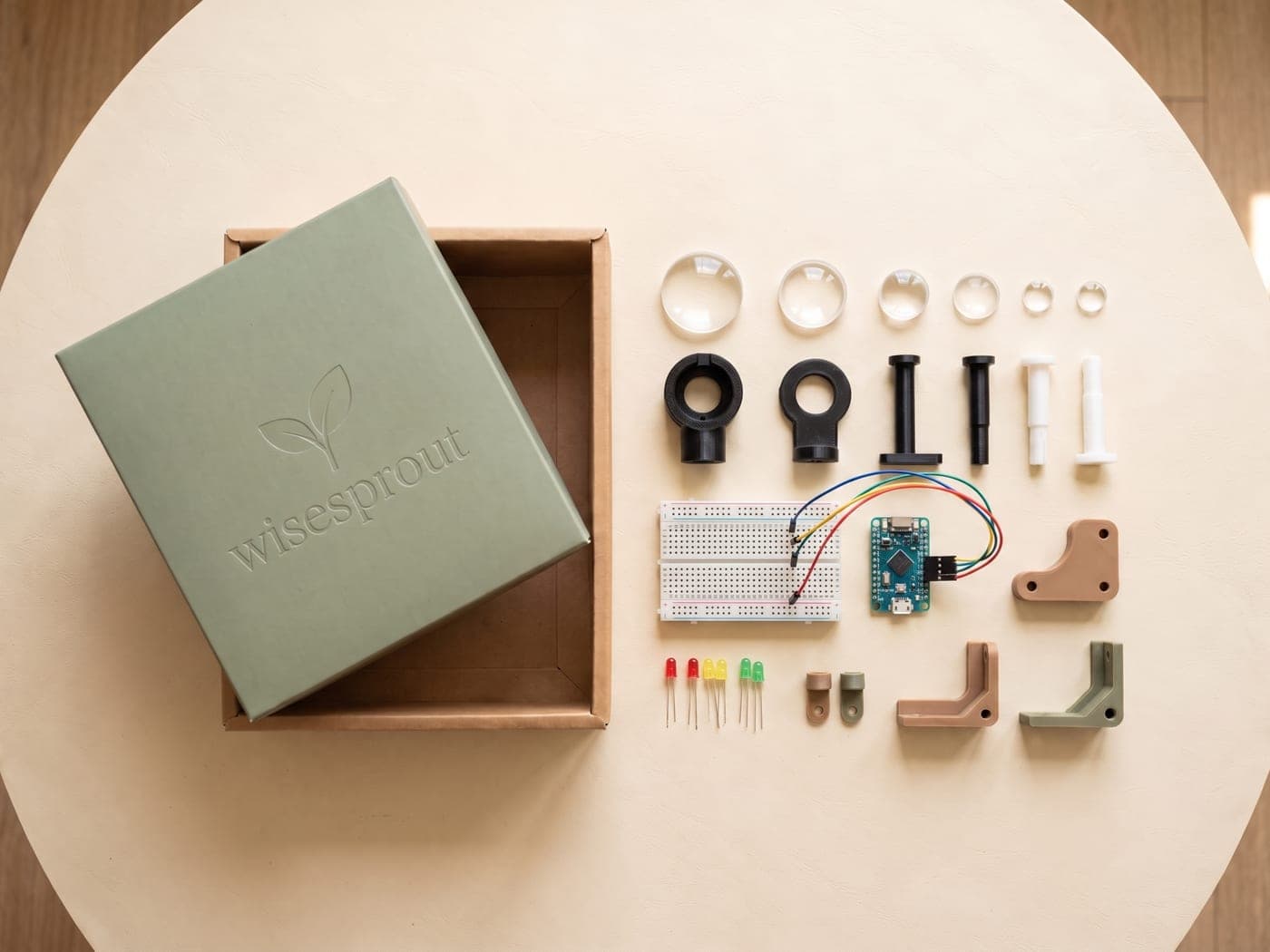
  • We ship the kit · your school brings a room and a supervisor

How it works — four steps

  1. We ship the kit

    We ship the kit

    Lenses, 3D-printed mounts, a breadboard, an Arduino — everything a class needs to build the instrument, delivered to your school.

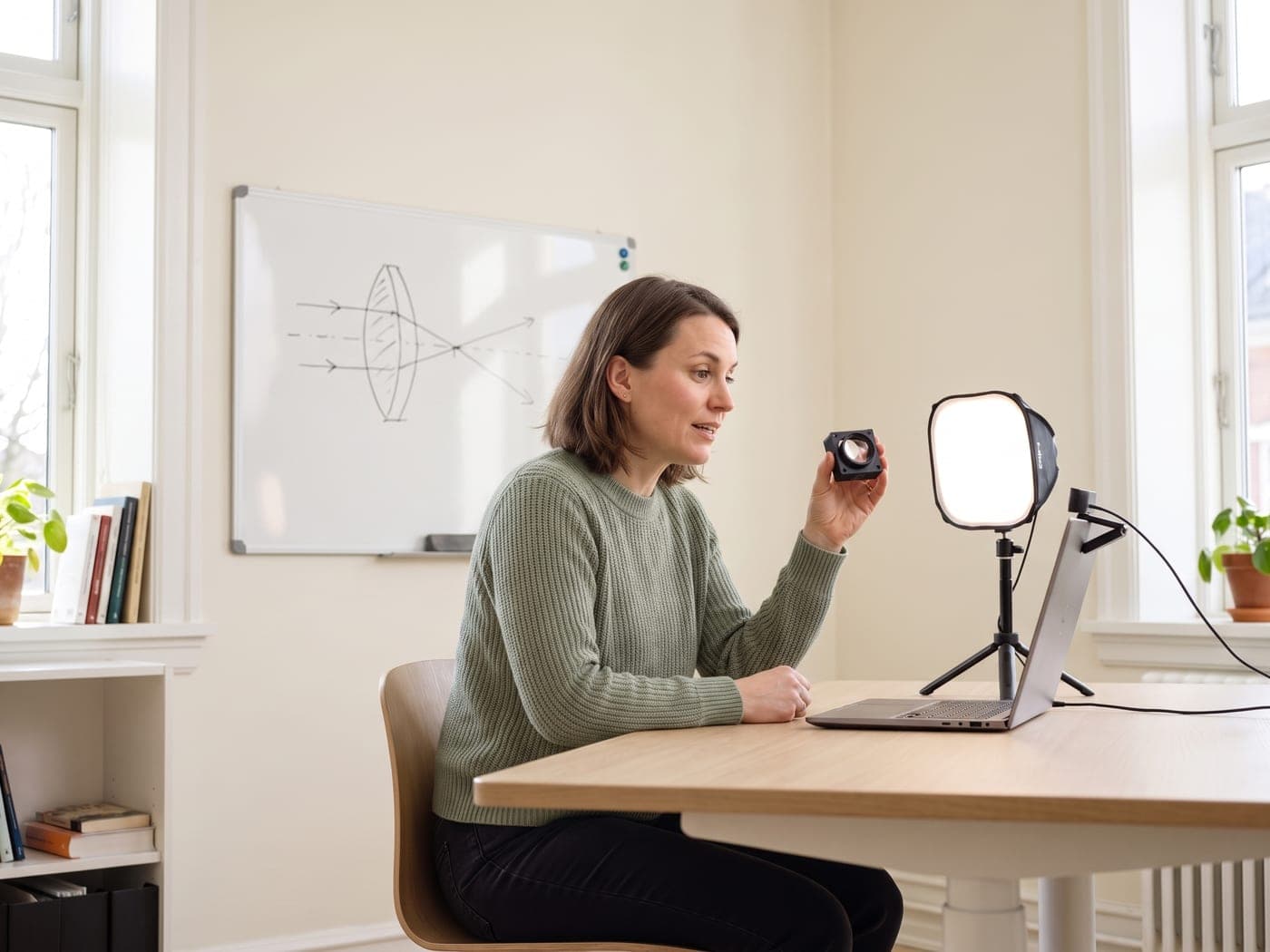
  2. The professor teaches, live

    The professor teaches, live

    Live online teaching of the principle and the method — with trained postgraduate assistants in the room.

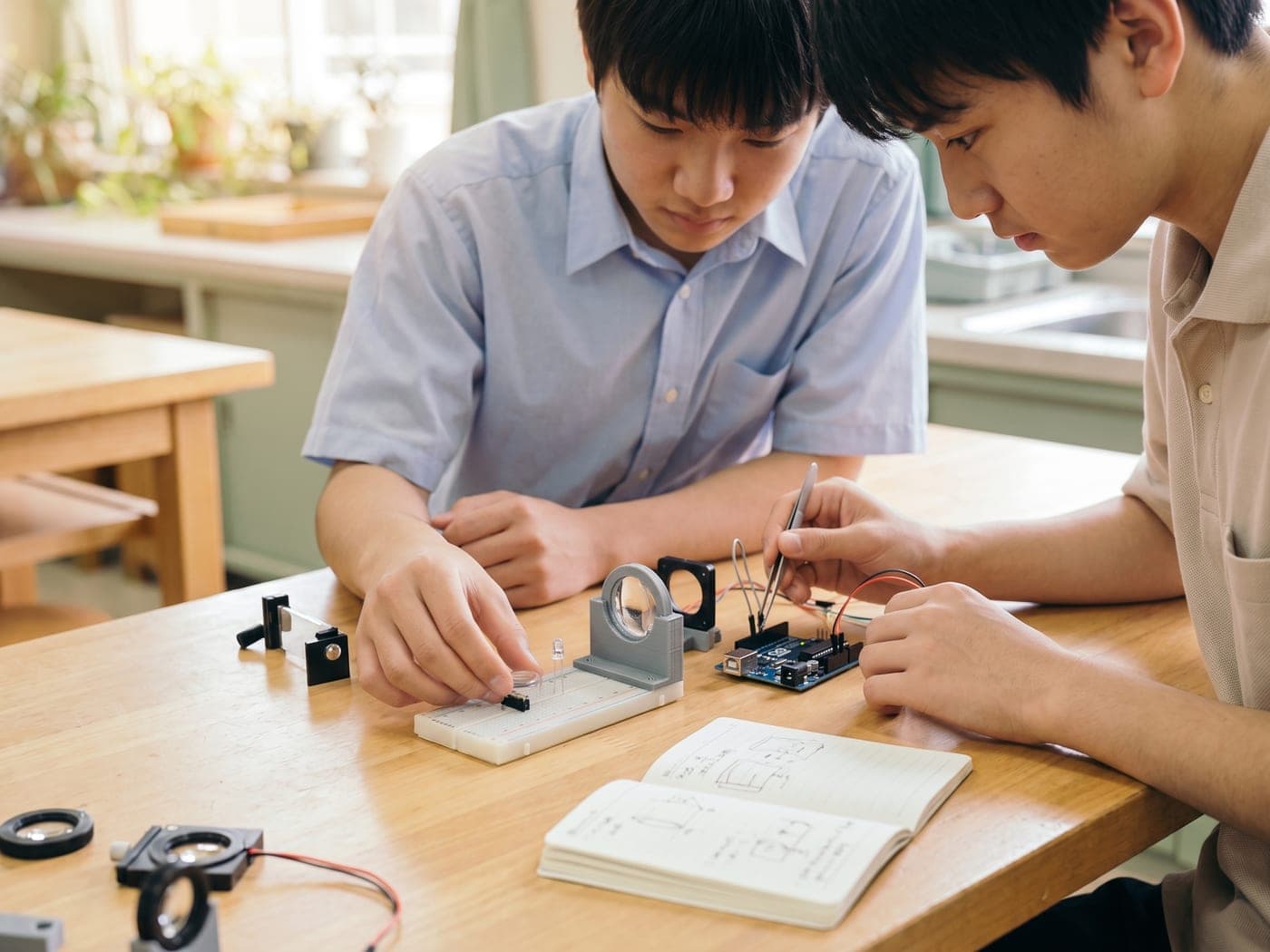
  3. Students build it

    Students build it

    The whole class assembles the instrument at the bench — real optics and electronics, not a black box.

  4. They measure & present

    They measure & present

    Real measurements, real data — findings that are genuinely their own.

Example project themes (updated each term)

  • Building a UV-Vis spectrometer from scratchChemistry
  • Quantifying nitrite with test stripsBiology · Medical diagnostics
  • Measuring Planck's constant with an LEDPhysics
  • Measuring the Young's modulus of a 3D-printed partMaterials

Currently in internal testing — we are building it openly, with the first schools, and we would rather say that than pretend it is finished. If you would like your school to be among the first, tell us.

In school: a whole-class research project run in your own lab — genuine hands-on science provision, without hiring for it.

See the Beta programme

Programmes and teaching rosters update each term — we bring the latest schedule to the conversation. School partnership terms are not listed on programme pages; public pricing there is the family-facing reference.

How schools can partner with us

Five ways in — start with one.

  1. Professor-led academic talks

    Free & open
    • Open talks for parents and students, on a regular basis — free for partner schools
    • Most requested now: “What should my child study to stay ahead in the age of AI?”
    • And: “Using AI to actually get smarter” — practical, for parents and students together
  2. Cohort programmes taught into your school

    Co-branded
    • Future Scholars · Juniors and the Professor Seminar Series, run as school cohorts
    • Live, taught by the professors themselves — online into your classrooms, or on campus
    • Holiday academic camps at your school — open to neighbouring schools, bringing prospective families through your gates
  3. Research Immersion as your school's UK programme

    UK pathway
    • A school cohort, 7–10 days in London, Oxford and Cambridge
    • Students return with a research report and growth portfolio
    • Slots into your summer or winter calendar as a named school pathway
  4. Mentorship for selected students

    One-to-one
    • Weekly one-to-one meetings with PhD and postdoctoral researchers
    • Academic guidance, profile-building, and honest advice on the road ahead
    • Targeted support for newer admissions tests such as ESAT and TMUA
  5. Partner-school arrangements

    Partner terms
    • School-procured or parent-paid — agreed per school
    • School-specific promotional terms for your families can be arranged
    • Exact structure agreed according to cohort size, delivery model and school involvement

Our commitment to partner schools

Every year, we will prioritise bringing at least one UK university academic to your campus in person — for a face-to-face session or an open talk. And whenever your school wants sessions taught on site, once enrolment and scheduling allow, we will do our best to coordinate the professors or mentors to teach your students face to face.

We put numbers on the table in the conversation, not on a webpage.

Example school scenarios

How schools actually use this.

Lower-school science enrichment

Students
Years 5–9
Format
A Future Scholars · Juniors cohort each term, timetabled or after school
What the school gains
A named science highlight in the lower-school week — visible to parents from day one

Senior academic extension

Students
Years 10–13
Format
Professor Seminar Series aligned to your sixth-form enrichment programme
What the school gains
Stretch provision with substance — certificates and optional reference letters behind it

School UK academic pathway

Students
Years 10–13, school-selected cohort
Format
Research Immersion in the summer or winter break, travelling as a school group
What the school gains
A flagship UK programme in the school calendar, with real academic output

Parent engagement

Students
Parents, with students welcome
Format
Professor-led talks each term — subject choices, AI and learning, UK pathways
What the school gains
Family-facing academic value, exactly when parents are asking these questions
Who we are

The people behind it.

We are professors, postdoctoral and PhD researchers from top UK universities — people who genuinely love to teach.

  • University of Oxford
  • University of Cambridge
  • Imperial College London
  • UCL
  • LSE

The most important reason schools choose to work with us is a direct line to an academic team genuinely at the frontier of research and teaching. We are the insiders — the people who design the courses and teach them. No middlemen.

Why we built Wisesprout

We built Wisesprout because we have taught inside other people's organisations — and kept finding our hands tied: adjust the course content, try a different way of teaching, not allowed. So we turned the rules around: here, the people who teach decide how to teach. If a student genuinely takes something away — or falls in love with a subject — the course has done its job.

We choose faculty on exactly two criteria: scientists at the real frontier of their fields, and, from among them, the ones genuinely best at teaching. That pickiness is concrete: for Juniors we replaced professor after professor until it felt right, and asked them to drop slides entirely — animations and live demonstrations instead. For the Seminar Series, the professor who leads the research teaches all fourteen hours in person.

  • Founding teamall active researchers at top UK universities
  • Facultyhand-picked by insiders
  • Admissions insightmentors with UK undergraduate admissions or interview experience
  • Bilingual supportbilingual team — smooth home–school communication

Academic assurance & operations

  • Every professor is invited personally by our academic team — there is no open application pool
  • Active researchers at top UK universities; tutor backgrounds are confirmed with your school before each cohort
  • Live teaching — no recordings; any change of teacher is discussed with the school in advance
  • Your school is welcome to observe any session, end to end
  • Bilingual coordination throughout — EN / 中文, for staff and parents alike
  • Class sizes, parent observation and data handling are agreed with the school before a cohort starts
Read our privacy policy
Next step

Everything on this page can be shaped around your school calendar, student profile and delivery model.

Discuss a school partnership

A short call to map your calendar and student profile onto the programmes above.

Request a sample cohort plan

We draft a term plan for one programme — students, schedule, outputs — for internal discussion.

Arrange a parent talk

Start with a free professor-led talk for your families and see the teaching first-hand.

Tell us your student age group, preferred format and timing — we reply with concrete options.

This page is shared privately with schools we are in conversation with — it is not linked from our public site.