Chemistry
Build a UV-Vis spectrometer — 0 to 1
Assemble a working spectrometer from optics and electronics, then use it to measure real samples and read the result out of your own data.
Top-university undergraduate level · 6–8 hours
Future Scholars · Research in ResidenceBeta
The newest strand of Future Scholars — currently in internal testing, launching Q1 2027. We design the instruments and send them to your school; a professor from a top UK university teaches live online, with postgraduate assistants in the room; and over seven sessions a whole class runs one real research project at the bench. Not a demonstration, not a simulation — real research, in residence at your school, no middlemen in between.
7 sessions · one real project · 50%+ hands-on time · a whole class at the bench
In internal testing · launching Q1 2027
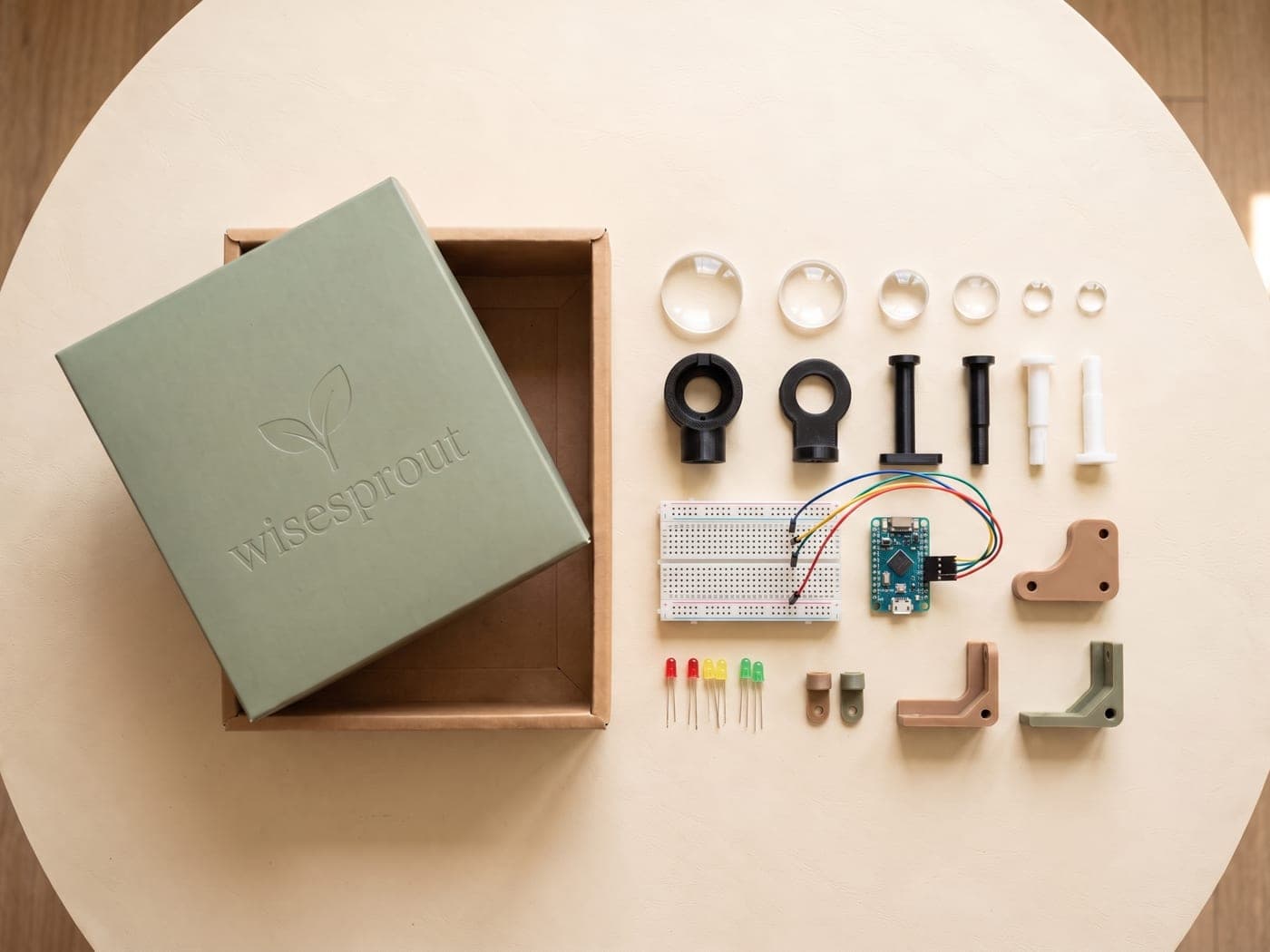
A Wisesprout box arrives — lenses, 3D-printed mounts, a breadboard, an Arduino and LEDs. Everything a class needs to build the instrument.
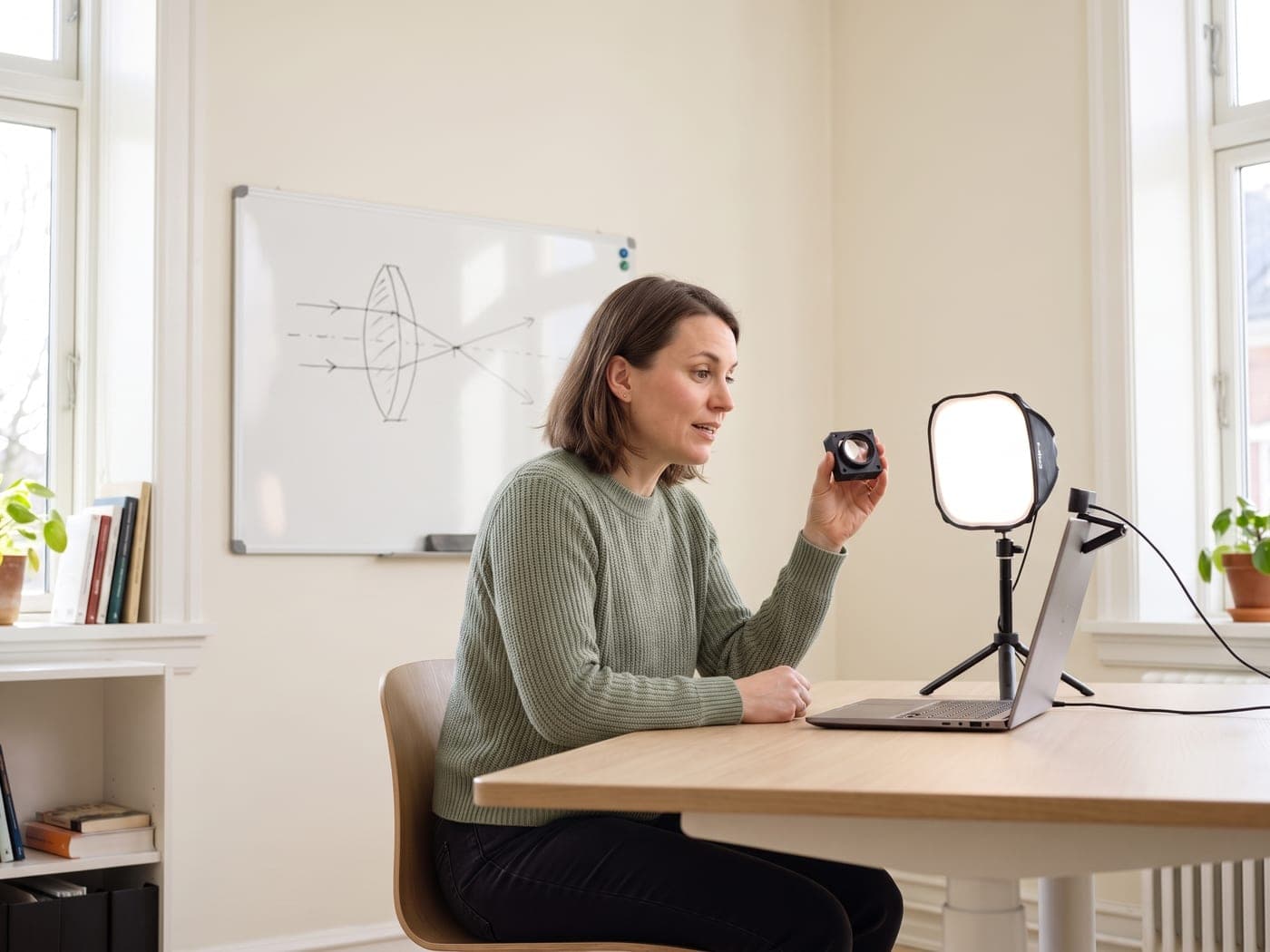
A professor from a top UK university teaches the principle and the method live online — with trained postgraduate assistants in the room.
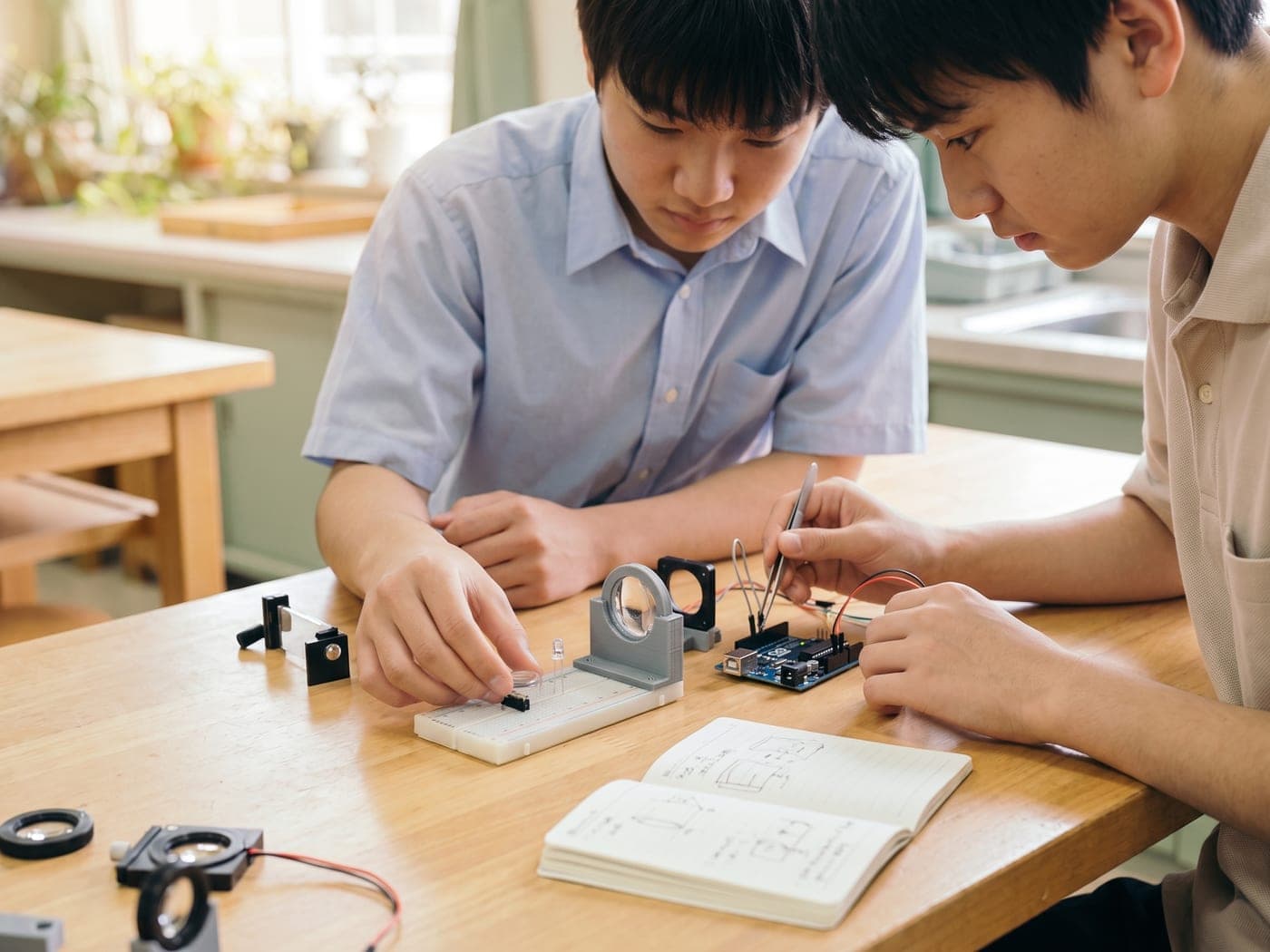
The whole class assembles the instrument themselves — real optics and electronics on the bench, not a black box.
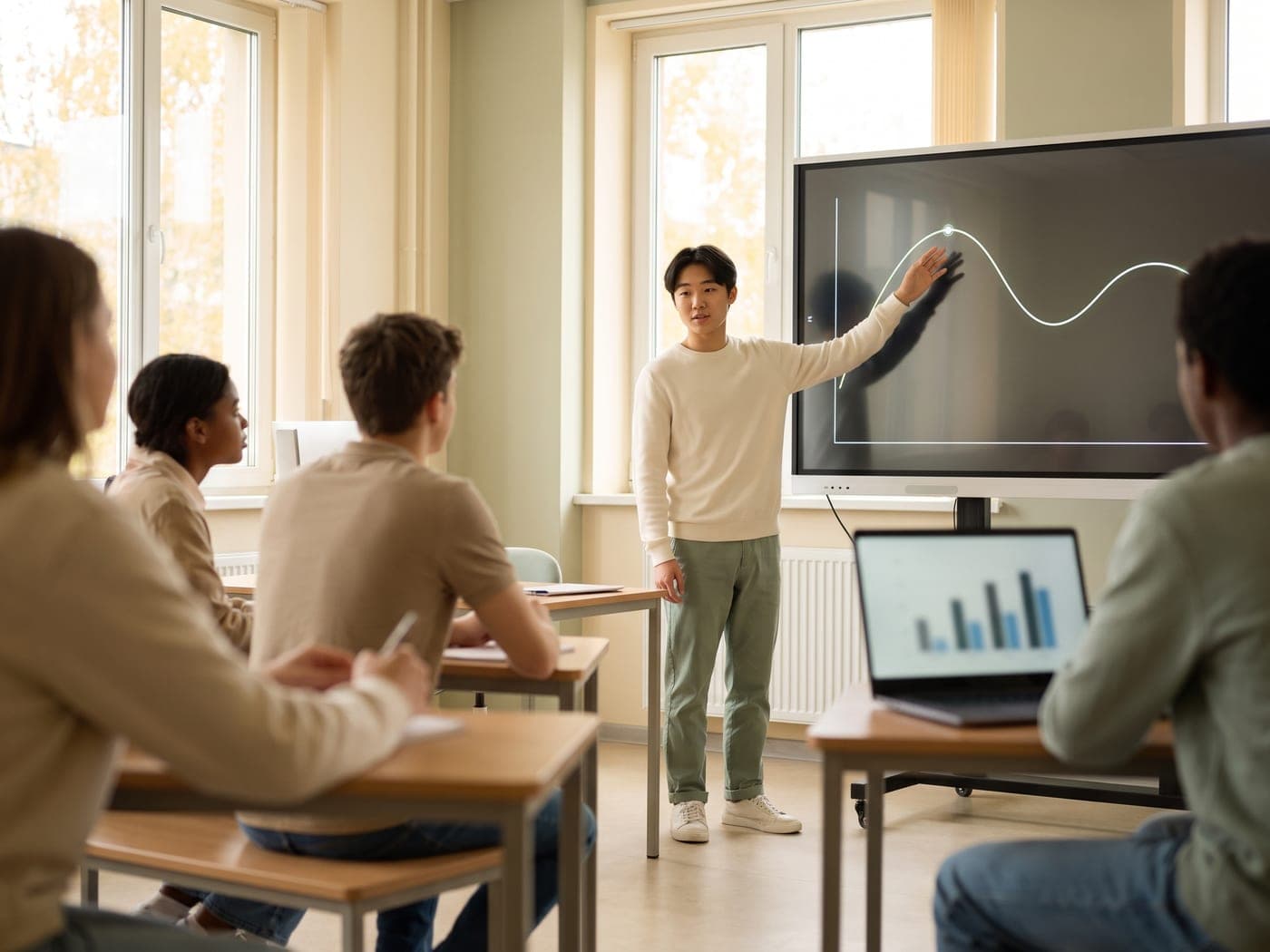
They take real measurements, work the data, and present findings that are genuinely their own.
Chemistry
Assemble a working spectrometer from optics and electronics, then use it to measure real samples and read the result out of your own data.
Top-university undergraduate level · 6–8 hours
Biology · Diagnostics
Turn a colorimetric test strip into a real measurement — build a calibration curve and put a number on nitrite concentration, the way a diagnostic assay actually works.
Top-university undergraduate level · 6–8 hours
Physics
Drive LEDs of different colours, find each one's turn-on voltage, and plot voltage against frequency — the slope hands you a fundamental constant of nature.
Top-university undergraduate level · 6–8 hours
Materials
Load 3D-printed beams, measure how far they bend, and work back to each material's stiffness — seeing how print settings change what a material can do.
Top-university undergraduate level · 6–8 hours
Maths · Economics · Data Science · AI
For strands that don't need a bench, the researcher runs a live online project — a data-science or AI build coded together on the day, or a modelling problem in maths, economics or finance.
Top-university undergraduate level · 6–8 hours
A growing catalogue — each class runs one, start to finish. New designs are added every term.
Safety here isn't a disclaimer bolted on at the end; it's designed in from the first sketch. That's the part a visiting speaker can't offer, and we think it matters most.
Look closely at what a school can buy today, and it's usually one of two things: a polished master-class, or science with the lights dimmed — a professor talks, students listen, and nobody actually touches an instrument. Research in Residence is neither. It's an original curriculum we built with our professors over many long hours of back-and-forth — a real research project, designed to be run by the students themselves, hands-on, from the first question to the final finding.
The early days were genuinely hard. A real research project that a whole class can run — remotely, safely, all the way to a real result — is not something you buy off a shelf; we had to invent it, one iteration at a time. What we have now is a mature system that runs, term after term.
So that a student who can't travel to the UK, or can't join an in-person programme over the holidays, doesn't miss the thing that matters most — a real research experience. And so that the experience becomes something concrete they can carry into a university application.
Real substance for the personal statement — especially the third question, on what you've done to prepare beyond the classroom. A genuine project the student ran, in their own words: a story only they can tell.
A substantial, verifiable extracurricular — real apparatus, real data, a real result — the kind that stands up when an admissions tutor asks about it.
A first-hand, deeper understanding of one subject — the kind that shows in an interview and an essay, and outlasts the syllabus.
Built for a school that wants to offer genuine hands-on research to a class — not a selected few, not a passive demo. It suits students with school-level science behind them; no prior lab experience is assumed, and the project is set to their level. [Year band to be confirmed.]
If you're a parent or a student wondering whether your school could bring this in, talk to us — we'll help you make the case.
And the honest line: if what you want is a certificate to name on a form, there are cheaper things to buy. If you want seven sessions that leave a class with a real result — and a real sense of what research is — this is built for exactly that.
Neither. A summer school teaches a syllabus to a room; a demo runs itself while students watch. This puts a real project and real apparatus in your students' hands, in your own lab, over seven sessions.
Two teaching roles, plus your staff. A professor from a top UK university teaches live online; trained postgraduate assistants are on site to run the bench and keep it safe. Your school adds a member of staff for pastoral supervision — they don't teach and don't need the subject.
Yes, by design. No UV sources — just carefully-tuned LEDs; power is 5V from Arduino boards; every instrument and consumable is validated in-house to be safe at students' stage; and postgraduate researchers are on site throughout. It all runs under your ordinary lab supervision.
A lab or classroom, and a member of staff to supervise (pastoral — no subject expertise needed). We send the instruments and consumables, and we bring the teaching.
No — no honest programme can. What we can promise is that the project, the data, and the findings are genuinely your students' own.